North Texas Data Centers 2026: Where They Are, What's Being Built and What It Means for Home Values
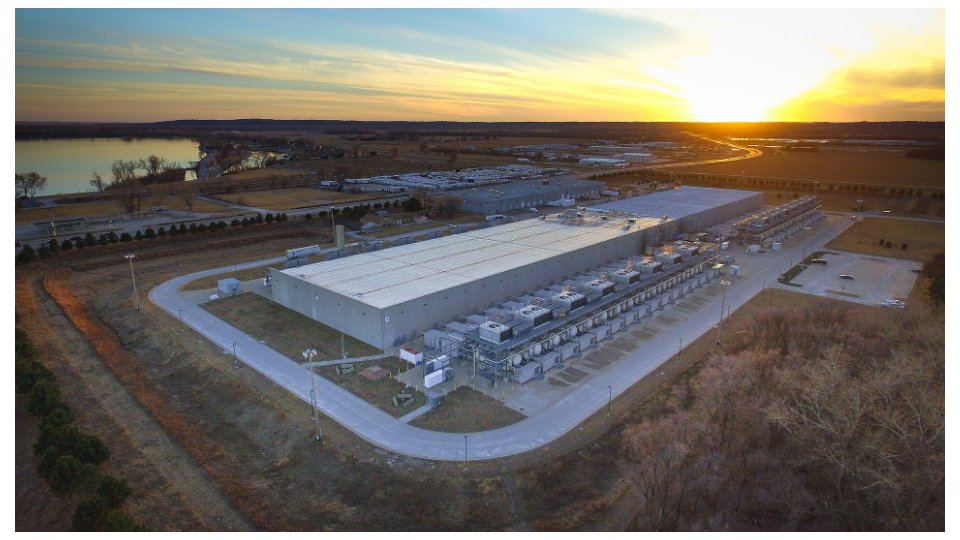
A hyperscale data center campus shown for illustration (Google, Council Bluffs, Iowa). Not a North Texas facility. Photo: Google Data Center, Council Bluffs Iowa by Chad Davis, via Wikimedia Commons, CC BY 2.0.
If you have driven I-35E through Red Oak, US-67 past Midlothian or Belt Line Road in Lancaster lately, you have seen them: long, windowless buildings, new substations and fresh high-voltage lines. North Texas data centers have become one of the biggest land-use stories in Dallas-Fort Worth, and in November 2026 they are also one of the biggest political stories in Texas.
This guide covers where data centers already operate in DFW, what is under construction right now, which large campuses are announced for the next few years, why the industry loves North Texas (cheap power is a big part of it), and, most important for homeowners, what research and local news actually say about how data centers affect home prices. We kept it fair. There are real benefits and real tradeoffs, and both deserve a clear look.
Key Takeaways
- DFW is one of the largest data center markets in the world. CBRE Research counted 1,432.8 MW of DFW data center inventory in the first half of 2026, with more than 765 MW under construction and about 95% of that already preleased. Cushman and Wakefield's May 2026 report ranked Dallas the No. 1 primary data center market in the world.
- The south Dallas corridor is the hot zone. Red Oak, Lancaster, Wilmer and Midlothian along I-35E and I-45 hold many of the region's biggest active builds, along with Fort Worth, Irving and Garland.
- Cheap power is a major draw. In August 2026, EIA data shows Texas commercial electricity averaged 8.96 cents per kWh versus 14.47 cents nationally, and industrial power averaged 7.21 cents versus 9.64 cents.
- The policy picture just changed. Since August 3, 2026, ERCOT has paused approvals to energize new data centers of 75 MW or more during a state-ordered audit, with reports due December 10, 2026. Governor-elect Gina Hinojosa, who takes office January 19, 2027, has promised a moratorium on new approvals until the Legislature passes new protections.
- Home value effects are mixed and very local. A George Mason University analysis of 2023 Northern Virginia sales found no evidence that being near a data center lowered home values on average. A separate working paper found homes within half a mile of announced Loudoun County data centers sold for about 2.8% less. We found no published DFW-specific study.
- If you live near a proposed campus, check the zoning case, the setback, noise limits, transmission line routes and the local tax deal before you buy or sell.
What Counts as a Data Center (and Why the Size Is Measured in Megawatts)
A data center is a secure building full of computer servers that store data and run cloud services, streaming, banking and, more and more, artificial intelligence. The industry measures size by power, not square feet. One megawatt (MW) is a lot of electricity, and campuses in DFW are now planned in the hundreds of megawatts. A gigawatt (GW) is 1,000 MW.
There are three broad types you will hear about:
- Colocation and interconnection sites, where many companies rent space and connect networks. Downtown Dallas has several of these.
- Wholesale and hyperscale campuses, where one big tenant, such as a cloud or AI company, leases a whole building or campus.
- Self-built hyperscale campuses, owned by companies like Meta and Google.
Where Data Centers Operate in North Texas Today
North Texas data centers grew up in a few clusters. The older ones sit near the fiber hubs in downtown Dallas, the Stemmons Freeway corridor, Carrollton and the Richardson and Plano Telecom Corridor. Newer, much larger campuses are going up where there is open land and big transmission lines, especially in southern Dallas County and northern Ellis County.
Operating Campuses You Can Verify
| Area | Operator and site | What is there | Source (date) |
|---|---|---|---|
| Downtown Dallas / Stemmons | Equinix DA1, DA2 and DA3 inside the Infomart, 1950 N. Stemmons Fwy; DA11 at 1990 N. Stemmons | Interconnection hub for many networks | Equinix location pages (2026) |
| Downtown Dallas | Digital Realty DFW10, 2323 Bryan St. | 387,500 sq ft facility | Digital Realty Dallas page (2026) |
| Downtown Dallas | DataBank DFW1 (company headquarters site) | Plus six other DataBank sites in the metro | DataBank press release (Sept. 10, 2024) |
| Carrollton | Digital Realty DFW11 (4025 Midway Rd.) and DFW12 (2440 Marsh Ln.); CyrusOne DFW1 | Enterprise and wholesale data centers | Digital Realty and CyrusOne location pages (2026) |
| Allen, Richardson, Lewisville | CyrusOne DFW3 to DFW5 (Allen), DFW6 (Richardson), DFW2 (Lewisville) | Multi-building campuses | CyrusOne locations page (2026) |
| Garland | Digital Realty Garland campus (DFW37, DFW39, DFW40 and more) | Active campus with ongoing suite fit-outs | Texas Department of Licensing and Regulation (TDLR) filings (2026) |
| Irving | QTS Irving 1 | 56 acres, six facilities, 165+ MW critical capacity | QTS Irving page (2026) |
| Fort Worth | QTS Fort Worth 1 | 52 acres, 70+ MW, planned potential of 200 MW | QTS Fort Worth page (2026) |
| Fort Worth (AllianceTexas) | Meta Fort Worth Data Center | Meta's first Texas data center; broke ground 2015; $1.5B+ invested | Meta fact sheet (Sept. 2026); AllianceTexas |
| Midlothian | Google's first Texas data center, announced 2019 | Google Texas page (2026) | |
| Red Oak | Second Texas data center, announced 2023; $600M on a 375-acre tract | Google Texas page; Site Selection (June 12, 2026) | |
| Red Oak | Compass Datacenters DFW III, 441 N. Austin Blvd. | Ten-building hyperscale campus, about $4.5B total investment | Compass economic impact report (Nov. 2026) |
How many are there in total? Counts vary by who is counting. Dallas Innovates, citing Data Center Map, reported 143 existing, 29 under construction and 44 planned data centers in DFW as of August 2026. In the south corridor alone, a Dallas County Herald mapping report (Oct. 30, 2026) counted about 10 operating centers across Red Oak, Lancaster and Wilmer, with almost four times that many in planning or construction.
Data Centers Under Construction in DFW (November 2026)
CBRE Research put DFW's under-construction total at more than 765 MW in the first half of 2026, up 81% from a year earlier, with about 95% preleased before completion. That means tenants, usually cloud and AI companies, have already signed up for most of what is being built.
Here are the larger DFW projects with construction underway, based on company statements and state filings:
| Project | City | Size | Status and timing | Source (date) |
|---|---|---|---|---|
| DataBank Red Oak Campus | Red Oak (Batchler Rd.) | 292 acres; up to eight two-story buildings; 480 MW at full buildout (Phase 1: four buildings, up to 240 MW of IT power) | Phase 1 buildings DFW9 to DFW12 fully leased to an AI company; DFW9 was expected online in August 2026, others staggered; 1,500 to 2,000 workers on site on a typical day | DataBank (Sept. 10, 2024; July 26, 2026) |
| STACK DFW02 | Lancaster | 193 acres; 300+ MW planned, expandable to 500+ MW | Under construction; a newer building, DFW02B ($540M, 54 MW), was filed in Oct. 2026 for March 2027 to Dec. 2028 construction | STACK campus page; DatacenterDynamics (Oct. 2026) |
| Compass DFW III | Red Oak | Ten buildings, about $4.5B | Under construction since late 2021; full operations expected by end of Q2 2028 | Compass report (Nov. 2026) |
| CyrusOne DFW7 | Fort Worth (7 miles NW of downtown) | 200 MW campus | Broke ground April 2025 next to an existing 100 MW battery storage site; capacity to customers beginning in 2026 | CyrusOne (Jan. 13, 2026) |
| Skybox PowerCampus Dallas | Lancaster area | 300 MW on about 115 acres | First building work began June 2024; state filings list fit-out work March 2026 to April 2027 | TDLR filings via project trackers (2026) |
| PowerHouse Irving | Irving / Las Colinas | About 201 MW across three buildings | First building topped out in March 2026; delivery reported to begin in early 2027 | DatacenterDynamics; TDLR (2026) |
| QTS DC7 | Lancaster (1341 Sunrise Rd.) | 363,500 sq ft, $290M | Construction set to start Sept. 2026 for a Dec. 2027 launch | DatacenterDynamics (2026) |
| Digital Realty DFW45 | Garland (1602 Ferris Rd.) | 672,000 sq ft, 80 MW, $300M | Registered with TDLR Sept. 2026; listed start June 2026, completion Jan. 2029 | TDLR filing (Sept. 8, 2026) |
One caution: state construction filings list planned dates, and those dates often slip. The 2026 energization pause (covered below) may also affect when some large new buildings can be switched on.
Announced and Future North Texas Data Center Projects
The pipeline behind those projects is even bigger. CBRE reported 3.7 GW of planned DFW greenfield development not yet under construction in the first half of 2026. Not all of it will be built, but these are the announced campuses getting the most attention:
| Project | Location | Size and investment | Expected timing / latest status | Source (date) |
|---|---|---|---|---|
| Crow Holdings and CleanArc Central Dallas Campus | Stemmons Corridor, Dallas (40 acres) | 245 MW | Phase I, a 70 MW building, expected late 2027 | Crow Holdings; CleanArc (Jan. 2026) |
| Black Mountain campus | Southeast Fort Worth (Lon Stephenson Rd. and Forest Hill Dr.) | $10B; four buildings, just over 1M sq ft footprint on 187 acres, on-site substation | Fort Worth City Council approved the revised site plan 7 to 4 on Aug. 25, 2026, with a 300-foot setback from homes | Fort Worth Report (Aug. 25, 2026) |
| New Compass campus | Red Oak (about 830 acres) | Size not disclosed | Rezoning approved 4 to 1 in May 2026, over resident protests; Red Oak's sixth data center campus | CBS Texas (May 12, 2026) |
| PowerHouse Circle T | Westlake (Highway 377) | About 1.1M sq ft | Keller approved a settlement in Nov. 2026 with noise limits, a berm and $1.876M in payments; Westlake's council still had to approve it | CBS Texas (Nov. 5, 2026) |
| Flexential Dallas-Talty | Talty, Kaufman County (110 acres) | Three 36 MW buildings, 108 MW total | Construction expected early 2027; first customers late 2028 | Flexential (July 28, 2026) |
| STACK DFW02B | Lancaster | 54 MW, $540M | Planned March 2027 to Dec. 2028 | DatacenterDynamics (Oct. 2026) |
Projects That Did Not Go Through (or Hit Resistance)
Not every proposal moves forward. In Prosper, the developer of "Project Tomahawk" withdrew its data center application on September 8, 2026, after the Planning and Zoning Commission unanimously recommended denial (Community Impact; CBS Texas). In Mesquite, the City Council denied a zoning change for a data center on Long Creek Road in March 2026. City staff said the project was already a permitted use under its existing zoning, and the council then began drafting tougher rules, including noise and water studies and a 65-decibel noise cap (KERA, June 2, 2026).
Regional Context: The Bigger Texas Build-Out
North Texas is not the only hot spot. Google announced a $40 billion Texas investment through 2027 in November 2025, including new campuses in Armstrong and Haskell counties and continued investment in its Ellis County sites (Office of the Governor; Google). Cushman and Wakefield's 2026 report also flagged West Texas as a fast-growing AI hub with 2.9 GW under construction. Those projects are outside DFW, but they compete for the same power, workers and equipment.
Why Data Centers Love North Texas
1. Electricity Is Cheaper Than the National Average
Power is the biggest operating cost for a data center, and Texas power is cheap by national standards. Here is the latest monthly comparison from the U.S. Energy Information Administration (Electric Power Monthly, data for August 2026, released October 23, 2026):
| Sector (August 2026) | Texas average | U.S. average | Texas vs. U.S. |
|---|---|---|---|
| Commercial | 8.96 cents/kWh | 14.47 cents/kWh | About 38% lower |
| Industrial | 7.21 cents/kWh | 9.64 cents/kWh | About 25% lower |
| Residential | 15.91 cents/kWh | 18.16 cents/kWh | About 12% lower |
Most of DFW is served by the ERCOT grid with a deregulated retail market, so large users can shop for power contracts, sign long-term renewable deals and, in some cases, pair with on-site batteries or generation. CyrusOne's Fort Worth DFW7 campus, for example, sits next to an existing 100 MW battery storage site to use substation capacity that was already built.
2. Land, Transmission and Fiber
Big campuses need hundreds of flat acres near high-voltage lines. Southern Dallas County and northern Ellis County have both. Skybox's chief development officer told reporters that much of the region's power connectivity "sits in south Dallas," which had excess capacity for many years (Dallas County Herald, Oct. 30, 2026). Red Oak's economic development team says hyperscalers wanted to be within about 30 kilometers of downtown Dallas for low-latency fiber, and Red Oak had raw land and high-voltage lines (Site Selection, June 12, 2026).
Fiber matters too. The Infomart on Stemmons Freeway is one of the region's main interconnection points, where many networks meet. AllianceTexas in north Fort Worth markets more than 19 fiber providers, along with 345 kV and 138 kV transmission lines.
3. Central Time Zone and Central Location
A Central time zone location lets operators serve both coasts with reasonable network latency, and DFW's two major airports make it easy to move people and equipment.
4. Lower Natural-Disaster Exposure (But Not Zero)
DFW is far from hurricane storm surge, earthquakes are rare, and there is plenty of room to spread buildings out. North Texas does face hail, tornadoes, extreme heat and the occasional winter storm. Grid reliability during events like the 2021 winter storm is one reason state lawmakers have focused on large-load rules.
5. Taxes: No State Income Tax and a Big Sales Tax Exemption
Texas has no state personal income tax, which helps companies recruit staff. The bigger incentive is the state's data center sales tax exemption under Texas Tax Code Section 151.359. Qualifying data centers skip the 6.25% state sales tax on servers, software, cooling systems, generators and the electricity they use. To qualify, a data center over 100,000 square feet must commit to at least 20 jobs paying at least 120% of the area's median wage and invest $200 million over five years, with a larger tier for bigger facilities (The Texas Tribune, April 8, 2026).
That exemption has become expensive. The Texas Comptroller's office estimates the state is forgoing at least $1.3 billion in fiscal 2026 and about $3.2 billion over the next two years, and 121 data centers were receiving the break as of April 2026 (The Texas Tribune). Lawmakers in both parties have said they will review it in the 2027 session.
6. A Proven Market Draws More Investment
"Everybody wants to be where everybody already is," John McWilliams, who leads data center research at Cushman and Wakefield, told the Dallas County Herald. His firm's 2026 Global Data Center Market Comparison (May 20, 2026) ranked Dallas No. 1 out of 107 global markets, weighing factors such as power availability, land, market size and construction pipeline.
DFW Data Center Market Snapshot
| Metric | Figure | Source and period |
|---|---|---|
| DFW inventory | 1,432.8 MW | CBRE Research, H1 2026 (published Aug. 2026) |
| Available capacity | 39.6 MW | CBRE Research, H1 2026 |
| Under construction | More than 765 MW, about 95% preleased | CBRE Research, H1 2026 |
| Planned, not started | 3.7 GW | CBRE Research, H1 2026 |
| DFW vacancy | 2.8% | CBRE Research, H1 2026, via Dallas Innovates |
| Global ranking | No. 1 primary data center market | Cushman and Wakefield, 2026 Global Data Center Market Comparison (May 2026) |
The Catch: Grid Strain, SB 6 and the 2026 Pause
All of that growth has put real pressure on the ERCOT grid, and state leaders have responded in several steps:
| Date | Action | What it does |
|---|---|---|
| June 20, 2025 | Senate Bill 6 signed and effective | Sets rules for "large loads" of 75 MW or more: new interconnection standards, a $100,000 fee for initial transmission studies, disclosure of on-site backup generation, possible curtailment in grid emergencies, review of co-location deals with existing power plants, and a study of how transmission costs are split between customers |
| June 10, 2026 | Governor's directive to the PUC and ERCOT | Requires data centers to pay for their own grid connections and infrastructure, and directs regulators to reduce residential transmission costs |
| Aug. 3, 2026 | Governor-ordered audit | ERCOT paused approvals to energize new data centers and crypto mining sites of 75 MW or more. Already connected loads and non-data-center loads are not affected |
| Dec. 10, 2026 | ERCOT reports due | Verification audit and community impact review reports go to the PUC |
| Jan. 19, 2027 | New governor takes office | Governor-elect Gina Hinojosa has promised a moratorium on new data center approvals until the Legislature passes new protections |
For scale, the governor's office said in August 2026 that ERCOT was considering more than 474 gigawatts of requests to connect, more than five times the state's record peak demand, and that about 90% of those requests were data centers. Many of those requests will never be built, but the number shows why regulators are worried.
The Texas Tribune reported on November 4, 2026, that Hinojosa's platform also includes protecting community water supplies, ending nondisclosure agreements that keep projects secret, giving local communities more say and making sure Texans don't pay more for electricity because of data centers. How much of that becomes law depends on the Legislature that meets in January 2027.
How Data Centers Affect Real Estate Prices: The Pros
A Bigger Tax Base for Cities and Schools
Data centers are expensive buildings filled with expensive equipment, and that adds up to a large property tax base, even after local abatements.
- Red Oak: The city's economic development team said Red Oak's taxable value was about $2.9 billion and on pace to reach $11 billion at full buildout of its data center projects (Site Selection, June 12, 2026). Mayor Mark Stanfill has argued that "data centers are how we get there" for parks, roads and lower tax rates (Dallas County Herald, Oct. 30, 2026).
- Compass in Red Oak: Compass projects its campus will pay about $30 million in property taxes in 2029, rising to about $83 million by 2039 when all buildings are fully taxable. Those figures come from the company's own economic impact report (Nov. 2026), so treat them as projections.
- Meta in Fort Worth: Meta reports more than 200 operational jobs and more than $5.2 million in direct funding to Tarrant County-area schools and nonprofits.
For homeowners, a larger commercial tax base can help keep city and school tax rates in check or pay for new services. How much that actually helps depends on abatement deals and on how each city budgets the money.
Jobs and Spending
Construction employment is large but temporary. DataBank reports 1,500 to 2,000 workers on its Red Oak site on a typical workday. Permanent jobs are much smaller. Compass projects more than 300 on-site workers at full operation. Some spin-off investment follows, too. Red Oak officials say a Schneider Electric plant with more than 100 workers came because of Compass.
Land Sales for Landowners
If you own large acreage near transmission lines in Ellis, Dallas, Kaufman or Tarrant County, data center demand has added a new group of buyers. Residents in Red Oak told reporters they expect the boom to push land values up (Dallas County Herald). We have not found published sale-price data for DFW data center land deals, so we won't put a number on it. Get a land-specific appraisal and talk to a real estate attorney before signing any option or sale contract.
Commercial and Housing Demand Nearby
Construction crews and permanent staff need places to eat, stay and live, which supports retail, hotels and rental demand nearby. In practice, most of the money stays in the commercial and industrial market rather than pushing up nearby home prices directly.
How Data Centers Affect Real Estate Prices: The Cons
Noise
Cooling fans, rooftop equipment and backup generator testing can create a steady hum. Noise is the most common complaint we see in DFW. In the Westlake settlement, Keller negotiated daytime and nighttime noise limits at residential property lines, a baseline noise study, quarterly monitoring for three years, a 10-foot landscaping berm, Tier 4 emissions controls on diesel generators, and daytime-only generator testing (CBS Texas, Nov. 5, 2026). Mesquite's draft rules would cap noise at 65 decibels.
Power Lines and Substations
Large campuses usually need new substations and transmission lines. Red Oak residents listed new electric lines among their top concerns, along with traffic and home values (Dallas County Herald). New transmission routes can affect properties that are miles from the data center itself.
Water Use
The Houston Advanced Research Center (HARC) estimated in January 2026 that Texas data centers use about 25 billion gallons of water per year, counting cooling and power generation, and that this could rise to between 29 and 161 billion gallons by 2030. Design matters a lot. Red Oak officials say all but one of the city's data center buildings use air-cooled or closed-loop systems, which use much less water.
Possible Pressure on Utility Rates
Whether data centers raise household electric bills is still being debated, and the answer is not settled. State leaders in both parties have made shielding residential customers a priority, which tells you the risk is taken seriously. Treat any specific rate forecast with caution until the PUC finishes its cost-allocation rules.
Competition for Land and Change in Character
Some residents moved to places like Red Oak for a rural feel and now live next to industrial-scale development. One resident told reporters he learned about a proposed campus on social media and found it across the fence line from his home. Others called their area a potential "sacrifice zone" (Dallas County Herald). That change in character is real, even if it doesn't show up in a price index.
What the Research Says About Home Values
There is no DFW-specific, peer-reviewed study of data centers and home prices that we could find. The best available evidence comes from Northern Virginia, the world's largest data center market:
| Study | Area and data | Finding |
|---|---|---|
| George Mason University Center for Regional Analysis (Aug. 2025) | Northern Virginia, 2023 home sales | No statistical evidence that being near a data center lowers home values on average, after controlling for home features and distance to industrial land |
| Rubinovitz, "Here Comes the Cloud" (SSRN working paper, not peer reviewed) | Loudoun County, Virginia | Homes within about half a mile of an already announced data center sold for about 2.8% less than similar homes slightly farther away |
How we read it: Across a whole region, data centers don't seem to drag prices down. Right next door, there may be a modest discount, especially for homes that back up to a campus, a substation or a new line. DFW results may differ because our campuses are newer, bigger and more often built near rural or edge-of-town neighborhoods. Treat any claim of a specific DFW price impact, positive or negative, with skepticism until local sales data exists.
Step by Step: What to Check If You're Buying or Selling Near a Proposed Data Center
- Find the zoning case. Search your city's planning and zoning agenda and the city council agenda for "data center" or "planned development." Note the acreage, building heights and any setback, like Fort Worth's 300-foot setback from homes for the Black Mountain site.
- Look up state construction filings. The TDLR project search often lists the owner, square footage, cost and planned construction dates for big buildings.
- Check for new transmission lines. Ask the utility (usually Oncor in DFW) whether a new substation or line is planned, and look for PUC filings on line routes. Lines can matter more to a specific lot than the data center itself.
- Read the noise and screening rules. Look for decibel limits at property lines, generator testing hours, berms and landscaping. The Westlake settlement is a good model of what neighbors can ask for.
- Ask about cooling and water. Air-cooled and closed-loop systems use far less water than evaporative cooling. City staff or the developer's application should say which is planned.
- Review the tax deal. Abatement or Chapter 380 agreements show when the project becomes fully taxable, which is when school districts and cities see the biggest benefit.
- Track the state rules. Watch for ERCOT's December 10, 2026 reports and the 2027 legislative session, which could slow, change or reshape projects that are still waiting on grid approval.
- Price with local comps, not headlines. Sellers should share known facts about nearby projects as required, and price against recent sales on similar streets. Buyers should factor in resale and ask their agent for comps closest to the site.
Frequently Asked Questions
Where are the most data centers in North Texas?
The biggest concentration of new construction is the south Dallas corridor: Red Oak, Lancaster, Wilmer and Midlothian along I-35E and I-45. Long-established clusters include downtown Dallas and the Stemmons Freeway corridor, Carrollton, Richardson, Plano and Allen, Irving and Las Colinas, Garland and north Fort Worth around AllianceTexas.
Why are data centers coming to Dallas-Fort Worth?
Cheaper electricity than the national average (Texas commercial power averaged 8.96 cents per kWh versus 14.47 cents nationally in August 2026, per EIA), large tracts of land near high-voltage lines, deep fiber connections, a central location, no state income tax and a state sales tax exemption for qualifying data centers.
Do data centers lower nearby home values?
The research is mixed. A George Mason University study of Northern Virginia found no average negative effect, while a working paper found about a 2.8% discount for homes within half a mile of announced Loudoun County data centers. No DFW-specific study has been published that we could find, so the effect on any one home depends on distance, screening, noise and new power lines.
Are data centers being paused in Texas?
Partly. Since August 3, 2026, ERCOT has paused approvals to energize new data centers of 75 MW or more until a state audit is done, with reports due December 10, 2026. Construction on some projects continues. Governor-elect Gina Hinojosa has promised a broader moratorium on new approvals until the Legislature acts in 2027.
Do data centers raise electric bills for homeowners?
That's still being decided. Senate Bill 6 (2025) and the governor's June 2026 directive both aim to make large loads pay for their own grid connections and to protect residential customers. The PUC is still writing the rules for how transmission costs are shared, so no one can say yet how much, if anything, data centers will add to household bills.
Do data centers help lower property taxes?
They can add a large amount of taxable value. Red Oak officials expect taxable value to grow from about $2.9 billion to $11 billion at buildout. But local abatements often delay the full benefit for years, and whether your tax rate actually falls depends on decisions made by your city, county and school district.
Related OnDemand Realty Reads
- Fort Worth's $1.3B Nvidia-Supplier Chip Plant: What It Means for South Fort Worth Real Estate
- Waxahachie, Texas Real Estate Market Update: October 2026
- Allen, Texas Real Estate Market Update: October 2026
- Denton, Texas Real Estate Market Update: October 2026
- Our Favorite 10 Home Builders in Dallas-Fort Worth (2026)
Thinking About Buying or Selling Near a Data Center?
Whether a new campus is going up down the road or you're weighing a home in Red Oak, Lancaster, Fort Worth or anywhere else in DFW, OnDemand Realty can help you look at the real comps, the zoning facts and the timeline so you can make a confident decision. Visit www.ondemanddfw.com to search homes and connect with our team.
Sources
- CBRE Research, North America Data Center Trends H1 2026 and press release (Aug. 2026)
- Dallas Innovates, DFW data center leasing hits 95% (2026)
- Cushman and Wakefield, Dallas ranked No. 1 primary data center market (May 20, 2026)
- U.S. Energy Information Administration, Electric Power Monthly Table 5.6.A (August 2026 data, released Oct. 23, 2026)
- Texas Legislature, SB 6, 89th Legislature (enrolled); Balch and Bingham, SB 6 summary (June 25, 2025)
- Office of the Texas Governor, Comprehensive data center audit (Aug. 3, 2026) and Google $40B announcement (Nov. 14, 2025)
- ERCOT, Batch Zero verification and audit presentation (Aug. 20, 2026)
- The Texas Tribune, Under Hinojosa, data center approvals could stay paused (Nov. 4, 2026) and Texas data center sales tax break (Apr. 8, 2026)
- Texas Tax Code, Section 151.359
- DataBank, Red Oak campus announcement (Sept. 10, 2024) and campus update (July 26, 2026)
- STACK Infrastructure, DFW02 Lancaster; CyrusOne, DFW7 Fort Worth (Jan. 13, 2026)
- Compass Datacenters, DFW III economic impact report (Nov. 2026)
- Crow Holdings, 245 MW Central Dallas campus (2026); Flexential, Kaufman County campus (July 28, 2026)
- TDLR, Digital Realty DFW45 Garland filing (Sept. 8, 2026)
- QTS, Irving and Fort Worth; Meta, Fort Worth Data Center fact sheet (Sept. 2026); Google, Texas data center locations
- Fort Worth Report, Black Mountain $10B site plan (Aug. 25, 2026)
- CBS Texas, Red Oak approves Compass campus (May 12, 2026) and Keller-Westlake settlement (Nov. 5, 2026)
- Dallas County Herald, Red Oak, Lancaster and Wilmer data center surge (Oct. 30, 2026); Site Selection, Red Oak profile (June 12, 2026)
- KERA, Mesquite data center rules (June 2, 2026); Community Impact, Project Tomahawk withdrawn (Sept. 2026)
- HARC, Texas data center water use (Jan. 21, 2026)
- George Mason University CRA, Data Centers and 2023 Home Sales in Northern Virginia (Aug. 2025); Rubinovitz, Here Comes the Cloud (SSRN)
Disclaimer: This article is for general information only and is not legal, tax, engineering or investment advice. Project sizes, dates and statuses come from the public sources listed above as of November 2026 and can change quickly, especially while state grid approvals are paused. Company figures are projections made by those companies. Always verify current zoning, utility and tax details with the city, county, utility and a qualified professional before making a real estate decision.
Categories
Recent Posts