What Is an iBuyer? A DFW Seller's Guide to Instant Cash Offers vs Listing (November 2026)

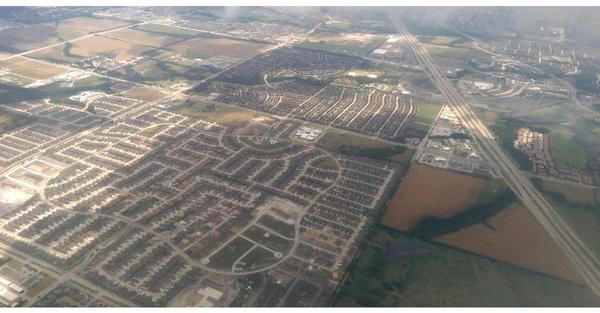
Photo: Roller House, Plano, Texas by Michael Barera, via Wikimedia Commons, CC BY-SA 4.0. Photographed October 2015; shown for illustration only and not a listing.
If you are asking what is an iBuyer, the short answer is a technology-driven company that makes a cash offer on your home from an online form and a walkthrough, then fixes up and resells the property. Chase's consumer guide, What is an iBuyer?, lays out the national basics: a fast offer, a closing date you choose and trade-offs in price and fees. This OnDemand Realty guide takes those basics and answers the question a Dallas-Fort Worth seller actually faces: should I take an instant cash offer, or list with an OnDemand agent?
Below you will find how iBuyers work, the real fees, a side-by-side net proceeds table with clearly labeled example math, the Texas rules that matter (no state income tax, property taxes, the option period and title insurance) and a plain checklist for when an iBuyer makes sense.
Key Takeaways
- An iBuyer buys your home for cash, then resells it. You skip showings and open houses, and you usually pick the closing date. The trade-off is that the offer is built to leave the company room to resell at a profit.
- Fees are the big variable. Offerpad's own FAQ states a 5% service fee plus roughly 1% in closing costs. Opendoor does not publish a fixed percentage, and its own Dallas example shows fees of about 4.8% of the sale price plus 3.5% in third-party charges.
- Repairs are deducted, not skipped. After the walkthrough, the final offer can change through a condition adjustment.
- Net proceeds is the only fair comparison. In our example below, a $400,000 home nets about $361,000 listed at full price and about $351,400 with a cash offer at 95% of value. Your numbers will differ.
- Texas has no state personal income tax, so the state does not tax your profit the way many states do. Property taxes, your mortgage payoff and title costs still shape what you keep.
- Market context matters. MetroTex reported a $379,000 median price and 4.6 months of inventory for the Metroplex in October 2026, so buyers have choices and pricing must be sharp.
What Is an iBuyer? The Plain-English Definition
The "i" stands for instant, internet or both, depending on who you ask. An iBuyer is a company that uses data models and a staff of local reviewers to value your home, make an all-cash offer and close on a schedule you choose. It then renovates as needed and sells the home to a retail buyer. Chase describes the same model: you submit details, receive an algorithm-based offer and close on your timeline, usually while paying notable service fees compared with the open market.
An iBuyer is different from a long-term investor. It makes money on volume and speed, which is why its offer sits below what a motivated retail buyer might pay. Two iBuyers operate here in North Texas as of November 2026, according to their own sites:
| Company | DFW status (checked November 2026) | Source |
|---|---|---|
| Opendoor | Its help center, updated March 4, 2026, lists Dallas-Fort Worth among Texas markets and says it covers single-family homes in the lower 48 states. It has a Fort Worth selling page showing Dallas-market figures dated through October 2026. Eligibility is decided home by home. | Opendoor Help Center, Opendoor Fort Worth page |
| Offerpad | Its locations page lists a Dallas/Fort Worth market with dozens of cities and towns, including Dallas, Fort Worth, Plano, Frisco, McKinney, Southlake and Keller. Its Fort Worth page says it buys across Tarrant County. | Offerpad locations, Offerpad Fort Worth page |
Coverage is not a guarantee. Both companies say you must enter your exact address, and each can decline a home based on age, lot size, price or condition. We did not independently confirm any other cash-offer company, so we are not listing any.
How the iBuyer Process Works, Step by Step
- Submit your address and details. Some platforms start with just an address.
- Receive an initial offer. Chase says responses typically come within 24 to 48 hours, though timing varies by platform.
- Complete a walkthrough. Opendoor's Fort Worth page describes a virtual walkthrough with a final offer after it. Offerpad's FAQ describes a condition review after you accept.
- Review the breakdown. Look for the service charge, estimated repairs, closing costs and your mortgage payoff.
- Choose a closing date. Opendoor's page lists a first closing 21 to 60 days after acceptance on its Cash now, more later program. Offerpad's page says as few as 8 business days, up to 60 days.
- Close at a Texas title company. A title or escrow professional coordinates the paperwork, as with any Texas sale.
What Do iBuyers Really Charge?
This is where sellers need to slow down. The headline offer is not the check you receive. Here is what the companies themselves say as of the dates shown.
| Cost line | Opendoor | Offerpad |
|---|---|---|
| Service fee | Not published as a fixed percentage. Its help page (updated November 12, 2026) says it varies and appears in your offer breakdown. | Its FAQ states 5% of the purchase price. See the note below on newer reports. |
| Closing costs | Estimated standard costs include title insurance, escrow fees, property taxes owed and recording fees. | FAQ says each side pays its own closing costs, about 1% of the purchase price, which may vary. |
| Repairs | Deducted as a condition adjustment based on Opendoor's own estimate, not a contractor quote. | Handled after assessment, often as a credit. Confirm in your offer. |
| Other | Its Cash now, more later option adds an upfront cash premium and a weekly holding cost until resale. | Moving help is advertised for moves within 80 miles. |
A fee note we could not fully verify: a 2025 consumer-site report says Offerpad's newer agent-led model may quote closer to 8%, and that the company no longer lists fees on its site. Offerpad's FAQ still says 5% as of our check. Because these conflict, ask for the number in writing before you rely on either one.
For perspective, Chase notes that iBuyer service fees can run 5 to 6% of the sale price, not including closing costs such as escrow or title insurance, and that iBuyers do not cover repair costs. Opendoor's own Fort Worth calculator, updated November 16, 2026, shows an illustrative $350,000 sale with $16,758 in Opendoor fees (about 4.8%) and $12,250 in common sale fees and third-party charges (about 3.5%), with no agent commission and no mortgage payoff assumed. That is roughly 8.3% in combined costs on that example. Opendoor labels it an estimate, not a quote.
Net Proceeds: Cash Offer vs Listing With an OnDemand Agent
Here is the comparison that matters. Every figure below is a hypothetical example we built to show the math. It is not an offer, a quote, a prediction or a promise from any company or from OnDemand Realty. We assume a home with a market value of $400,000 and no mortgage payoff, so you can subtract your own payoff at the end.
| Line item (example) | List with an agent | iBuyer cash offer |
|---|---|---|
| Price | $400,000 (sells at full value) | $380,000 (offer at 95% of value) |
| Agent commission (example 5.5%, negotiable) | -$22,000 | $0 |
| iBuyer service fee (example 5% of offer) | $0 | -$19,000 |
| Buyer concessions (example 1%) | -$4,000 | $0 |
| Seller closing costs, title, escrow (example 1%) | -$4,000 | -$3,800 |
| Repairs or condition adjustment (example) | -$3,000 | -$4,000 |
| Prep and cleaning (example) | -$1,500 | $0 |
| Carrying costs (example $1,800 a month; 2.5 months listed vs 1 month to close) | -$4,500 | -$1,800 |
| Estimated net before mortgage payoff | $361,000 | $351,400 |
In this example the cash offer nets about $9,600 less, in exchange for speed and certainty. Change the assumptions and the answer moves, which is why the next table matters.
| Scenario (same $400,000 home, same example costs) | Estimated net | Compared with listing at $400,000 |
|---|---|---|
| List and sell at $400,000 | $361,000 | Baseline |
| List and sell at $380,000 (5% lower) | $342,500 | -$18,500 |
| Cash offer at 95% of value ($380,000) | $351,400 | -$9,600 |
| Cash offer at 92% of value ($368,000) | $340,120 | -$20,880 |
| Cash offer at 88% of value ($352,000) | $325,080 | -$35,920 |
The lesson is not that listing always wins. If your home is dated and would sell 5% below full value after inspection credits, a strong cash offer can beat a weak listing. The point is to compare net numbers for your own address, with a written breakdown from each side. Ask an OnDemand agent for a free pricing opinion, then request an offer from any cash buyer you are considering and put the two nets next to each other.
Texas Specifics Every DFW Seller Should Know
No state income tax
Texas has no state personal income tax, according to the Texas Comptroller. That means the state does not add a layer on your gain. Federal rules still apply, and the home-sale exclusion has conditions, so talk with a tax professional about your situation.
Property taxes
Texas has no state property tax. Cities, counties, school districts and special districts set local rates, and property is generally appraised as of January 1, per the Comptroller. At closing, the seller's share of the year's taxes is prorated. Opendoor's help page lists property taxes owed among its estimated standard costs, which is a reminder to check that line in any offer. Our related guide, How Much Does It Really Cost to Sell a House in Texas?, walks through the full list.
The option period
In the standard TREC residential contract, a buyer pays a nonrefundable option fee for an unrestricted right to terminate within a set number of days, and the earnest money is refunded if they do. The Texas Real Estate Research Center explains the mechanics. For a seller, that means a retail buyer can inspect, negotiate repairs or walk away during that window. A cash iBuyer deal has its own condition review and terms, so read the contract rather than assuming the same protections.
Title insurance
Paragraph 6 of the TREC contract lets the parties choose who pays for the owner's title policy. The Texas Department of Insurance notes the buyer and seller may negotiate it. In many Texas resales the seller customarily pays, but it is negotiable. Open title issues, liens, unpaid HOA balances or estate paperwork can slow any sale, cash or not.
DFW Market Context: October 2026
Your decision should reflect where the market stands right now. Two sources give slightly different views because they cover different geographies and methods, so we label each.
| Measure | Figure | Data period and source |
|---|---|---|
| Metroplex median price | $379,000, down 1.6% from October 2025 | October 2026, MetroTex Association of Realtors via DFW Agent Magazine |
| Closed sales | 6,377, down 15.6% | October 2026, same source |
| Months of inventory | 4.6, up from 4.5 a year earlier | October 2026, same source |
| Active listings | 34,941, up 0.3% | October 2026, same source |
| Days on market | 66, plus 32 days to close | October 2026, MetroTex report as summarized by Daily Aletheia |
| Dallas market median sale price | $365,000, with 82 days to sale and 95.0% of original list price received | October 2026 NTREIS data as displayed on Opendoor's Fort Worth page |
What this means for you: with about 4.6 months of supply, homes are taking time, and the Dallas figures show sellers receiving about 95% of their original list price on average. Overpricing is costly. That cuts both ways. A realistic price from an OnDemand agent can put a listing in front of buyers quickly, while a slow market is also exactly when the certainty of a cash offer feels appealing. The right answer depends on your price, condition and deadline.
When Does an iBuyer Make Sense?
Based on the national trade-offs Chase describes and the costs above, a cash offer can be a reasonable fit when:
- You have a hard deadline. A job transfer, a closing on your next home or a family situation needs a certain date.
- The home needs work you cannot or will not do. A deducted repair credit can beat managing contractors, as long as the credit is fair.
- You value privacy. No yard sign, open house or stream of showings.
- You want to avoid financing risk. A cash buyer removes the loan approval step.
- Your home qualifies. It must fit the company's rules on price, age and location.
When Listing With an OnDemand Agent Usually Wins
- Your home is move-in ready in a neighborhood where buyers are active. Opendoor's own page says listing is usually the best fit for maximum value if you can wait.
- You have a few months of flexibility.
- You want negotiating leverage through multiple offers and a priced-to-market strategy.
- You want the full upside. A retail sale can capture value that a cash buyer builds into its own margin.
- You want a local professional. An OnDemand agent can compare your home to current neighborhood sales, advise on pre-listing prep and walk you through the Texas contract.
Not sure which side you are on? Read 7 Mistakes DFW Home Sellers Make Before Listing to avoid the most common pitfalls before you decide.
How to Compare Offers: A Seller's Checklist
- Get a pricing opinion from an OnDemand agent based on recent closed sales near you.
- Request a written offer breakdown from any cash buyer, with every fee and deduction itemized.
- Ask how and when the offer can change after the walkthrough.
- Subtract your mortgage payoff, prorated taxes and any HOA balance from both paths.
- Compare timelines honestly, including your carrying costs.
- Check what happens if the deal does not close.
- Choose on net dollars, timing and peace of mind.
Frequently Asked Questions
What is an iBuyer in real estate?
An iBuyer is a technology-driven company that makes a cash offer on a home, closes on a date you pick and resells the home afterward. Chase notes that iBuyers do not operate in every state.
Do iBuyers operate in Dallas-Fort Worth?
Per their own sites as of November 2026, Opendoor lists Dallas-Fort Worth among its Texas markets and Offerpad lists a Dallas/Fort Worth market. Eligibility is decided for each home, so enter your address with each company.
How much do iBuyers charge?
Offerpad's FAQ states a 5% service fee plus about 1% in closing costs, though a 2025 report suggests it may be higher now. Opendoor does not publish a fixed percentage and shows the amount in your offer. Repairs and holding costs may be deducted on top.
Will I get more money listing or taking a cash offer?
Often more by listing, especially if the home is in good shape and you have time, but not always. Compare net proceeds for your address using real written numbers.
Does the option period apply to an iBuyer sale?
The option period is a feature of the standard TREC contract between a seller and a retail buyer. An iBuyer uses its own agreement and review process, so read what protections and deadlines apply to you.
Do I pay Texas income tax on a home sale?
Texas has no state personal income tax. Federal tax rules can still apply to a gain, so ask a tax professional.
Sources
- Chase, What is an iBuyer? (published February 14, 2023; last edited March 16, 2026)
- Opendoor Help Center, where Opendoor buys; service charge; condition adjustment; Fort Worth page
- Offerpad sell FAQ; locations; Fort Worth page
- DFW Agent Magazine, MetroTex October 2026 report; Daily Aletheia
- Texas Comptroller, property tax basics
- Texas Real Estate Research Center, option period basics; TREC residential contract; Texas Department of Insurance, title insurance FAQ
Related Reading From OnDemand Realty
- How Much Does It Really Cost to Sell a House in Texas? November 2026 Guide
- 7 Mistakes DFW Home Sellers Make Before Listing (November 2026)
- Seller-Paid 2/1 Buydown: Worth It? Pros, Cons and Math
- McKinney Housing Market Update November 2026
Ready to Compare Your Options?
Thinking about selling and weighing a cash offer against a listing? OnDemand Realty can give you a data-based pricing opinion so you can compare real net numbers. Start at www.ondemanddfw.com.
Disclaimer: This article is for general information only and is not legal, tax or financial advice. All net-proceeds figures are hypothetical examples created by OnDemand Realty to illustrate math and are not offers, quotes or predictions. Company terms, fees and market coverage come from the companies' public pages as read in November 2026 and can change. Market figures come from third-party sources and may be revised. Confirm details for your property with the company, your title company and a qualified tax or legal professional.
Categories
Recent Posts